By Shanti Kaur
The year 1606 marked a major change in Sikh history. This was when the 5th Sikh Guru, Guru Arjan Dev Ji, was executed by order of the Mughal Emperor Jahangir. His martyrdom devastated the Sangat. Until then, Sikhs had been a peaceful community focused on devotion, equality, and service. Guru Arjan Dev's sacrifice showed that protecting truth and dignity would need both faith and strength. In this difficult time, the 11-year-old Guru Hargobind Sahib Ji became the next Guru and introduced the important idea of Miri Piri, which transformed Sikh identity.
The Construction of the Akal Takht
After his father’s martyrdom, Guru Hargobind Sahib decided not to hold the usual Darbar. Instead, he started building a new center for the community right across from the Harmandir Sahib in Amritsar. This new building was called the Akal Takht, which means the Throne of the Timeless One.
The Harmandir Sahib was built lower to show humility and was used for kirtan and meditation. In contrast, the Akal Takht stood on a high platform. This design was meant to reflect and challenge the Mughal rulers’ courts. By creating a throne for divine justice rather than imperial power, Guru Hargobind Sahib established a place to address the community’s worldly matters. It was here, with the Sangat gathered, that Miri Piri was born.
Standing Before the Sangat with Two Swords
For many years, the ceremony to install a new Guru followed sacred traditions. It included giving the Seli, a woolen cord worn by earlier Gurus, which stood for spiritual detachment and devotion, a practice started by Guru Nanak Dev Ji. Baba Buddha Ji, a respected Sikh elder who had performed this ceremony for past Gurus, stepped forward to place the Seli on the young Guru.
To everyone’s surprise, Guru Hargobind politely refused the woolen cord. He said that the times had changed and a new form of divine authority was needed. Instead, he asked for a sword.
Baba Buddha Ji, who had never prepared a leader for battle before, brought the sword and accidentally fastened it on the wrong side of Guru Hargobind’s waist. When he noticed the mistake, he tried to fix it. Guru Hargobind gently stopped him and said that a sacred act by a saint should not be changed. Then, he asked for a second sword to balance the first, wearing one on each side.
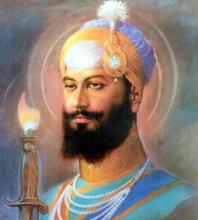
Guru Hargobind Ji stood before the amazed congregation at the Akal Takht, wearing royal clothes and two swords at his waist. This new image of leadership changed how his followers saw themselves. It showed that the time for quiet endurance was over and a new era of active, righteous resistance had started.
The Meaning of Miri and Piri
The two swords were not just for show or fighting. They stood for a deep and practical philosophy called Miri Piri. Both words come from Persian-Arabic, which had strong political and spiritual meaning in seventeenth-century India.
The first sword, called Miri, comes from the word Amir or Emir, which means ruler or leader. This sword stood for worldly authority and responsibility. It showed that a leader must govern fairly and care for the community’s needs. Through Miri, the Guru recognized that people live in a real world where the weak can be oppressed, and faith must have the strength to defend them.
The second sword, called Piri, comes from the word Pir, meaning a spiritual guide or saint. This sword stood for spiritual authority and moral clarity. It represented devotion to God and values like humility, compassion, and truth. Piri made sure the community stayed true to its morals and kept worldly power from turning into greed or conquest.
By wearing both swords at once, Guru Hargobind Ji showed that true spirituality does not mean leaving behind worldly duties, and real action in the world should not ignore moral values. The two sides depend on each other. Worldly leadership should be guided by spiritual wisdom, and spiritual life should have the courage to protect itself and others.
Legacy and Impact on the Sikh Panth
This important moment in front of the Sangat set the foundation for the idea of the Sant-Sipahi, or Saint-Soldier. This idea was later fully developed by the tenth Guru, Guru Gobind Singh Ji Maharaj, when he created the Khalsa.
After the ceremony, Guru Hargobind told his followers to change what they offered. He asked the different congregations to bring good horses, armor, and weapons instead of money. He also made physical training, wrestling, martial arts, and hunting important parts of daily life, along with prayer and meditation.
This two-part philosophy is still seen in Sikhism today. The Adi Shakti, the main symbol of Sikhism, has two curved swords for Miri and Piri, joined around a double-edged blade and a circle. At the modern Akal Takht, two Nishan Sahib flags fly side by side. The flag for worldly authority is a bit lower than the one for spiritual authority, showing that while both matter, worldly power should always follow moral truth.
By what he did in front of the Sangat in 1606, Guru Hargobind Ji made sure his followers would not just accept what happened to them. Instead, they would become active, spiritually strong defenders of justice and freedom.